Stretching Exercises for Seniors (With Pictures)
These stretching exercises for seniors take 10 to 15 minutes and need only a sturdy chair and loose clothes. You will stretch the neck, spine, hips, calves and shoulders, then finish with slow belly breathing. Seven of the eight stretches are done seated.
Stretch to a gentle pull, never to pain, and breathe slowly through each hold. Morning is a good time to loosen up after sleep, and evening works well to unwind. Doing it at the same time each day makes it easy to remember, and short daily sessions add up quickly.
2-page PDF, large print, US Letter. Use the Men / Women switch at the top to change the photos.
Who these moves are for
This routine suits adults over 60, 70 and 80 who want bending, reaching and turning to feel easier. It is a good fit for beginners, for people who sit for long periods during the day, and for anyone who wakes up feeling stiff. Most of it is done seated, so it also works in a chair at home or while traveling.
The 8 moves
-
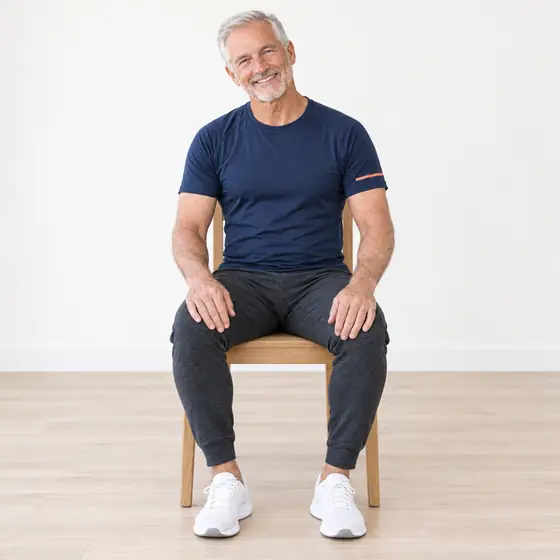
Neck Tilt
Eases the side of the neck, which helps when you turn to check your blind spot while driving.
- Sit tall, shoulders relaxed.
- Gently tilt one ear toward your shoulder.
- Hold and breathe, then switch sides.
- Easier
- Tilt only a little.
- Harder
- Rest the hand lightly on the head.
- Coach tip
- Let the opposite shoulder drop.
- Week 1
- hold 15 seconds
-
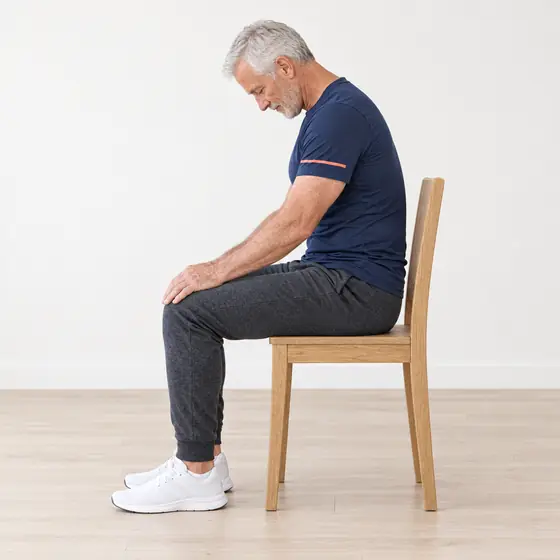
Seated Cat-Cow
Moves the spine gently forward and back, a calm way to loosen your back after sleep or a long drive.
- Sit tall, hands on your knees.
- Round your back, tucking your chin.
- Then lift your chest and gently arch. Move slowly between the two.
- Easier
- Make the movement smaller.
- Harder
- Pause 2 seconds in each position.
- Coach tip
- Move one part of the spine at a time.
- Week 1
- 6 reps
-
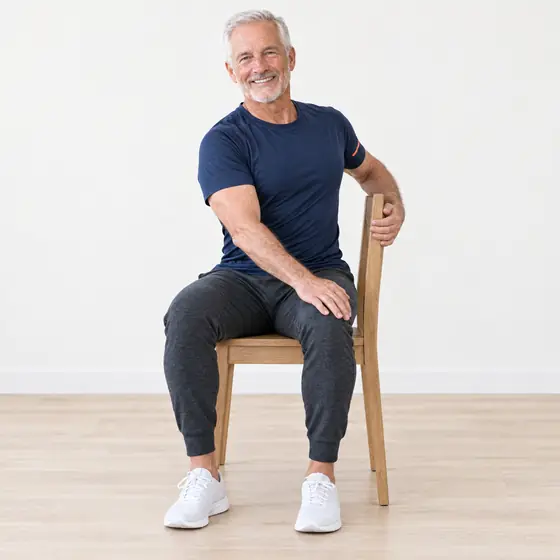
Seated Twist
Keeps the spine turning freely, useful for looking over your shoulder or reaching for a seat belt.
- Sit tall, feet flat.
- Place one hand on the opposite knee, the other on the chair back.
- Turn gently and hold, then switch sides.
- Easier
- Turn only a little.
- Harder
- Sit taller and turn a little further.
- Coach tip
- Grow tall first, then turn.
- Week 1
- hold 15 seconds
-
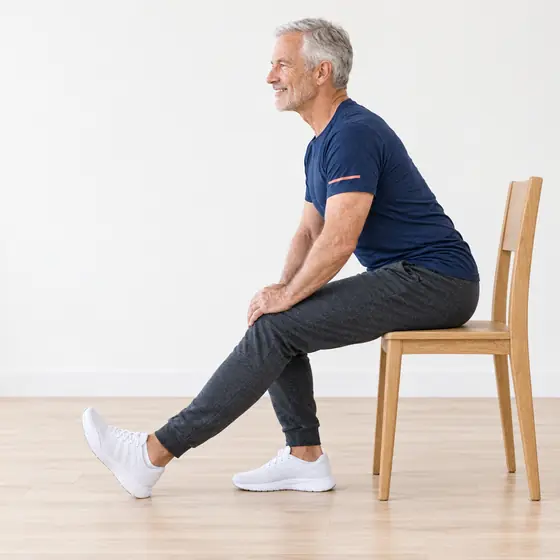
Seated Hamstring Stretch
Lengthens the back of the thigh, making it easier to bend down to put on socks and shoes.
- Sit at the front of the chair, one leg straight, heel down, toes up.
- Keep your back long and lean forward from your hips.
- Hold, then switch legs.
- Easier
- Lean forward only a little.
- Harder
- Reach your hands toward your shin.
- Coach tip
- Lean from the hips, not the shoulders.
- Week 1
- hold 15 seconds
-
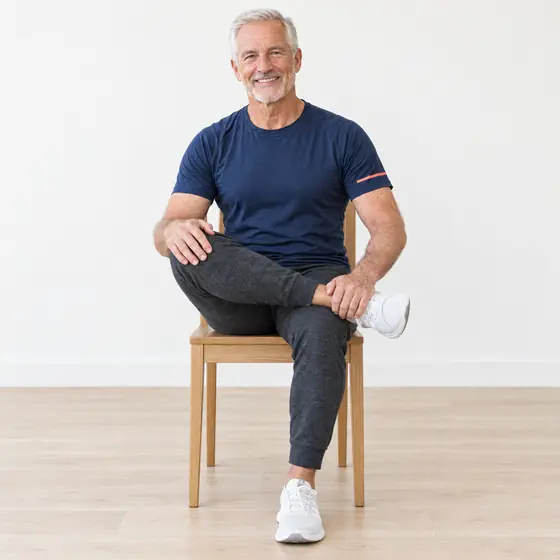
Seated Figure-4 Stretch
Opens the hips and glutes, which helps when you cross your legs or step into a bathtub or car.
- Sit tall, feet flat.
- Rest one ankle on the opposite knee.
- Sit tall and lean forward gently, then switch.
- Easier
- Rest the ankle on the shin instead.
- Harder
- Press the raised knee down gently.
- Coach tip
- Breathe slowly into the stretch.
- Week 1
- hold 15 seconds
-
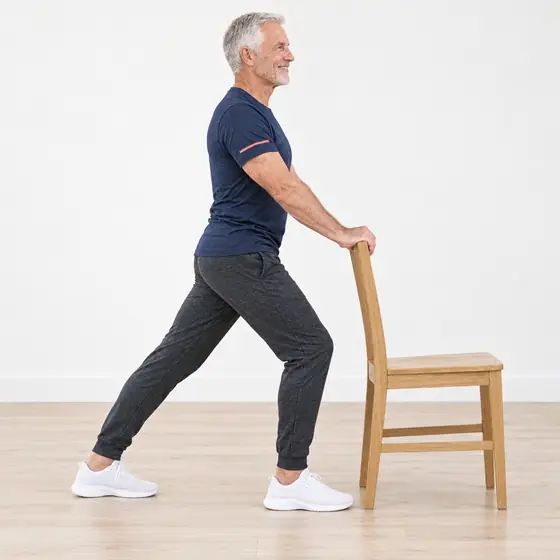
Calf Stretch
Loosens tight calves so your heel settles and each walking step rolls smoothly through the foot.
- Hold the chair back, step one foot back.
- Keep the back leg straight, heel down.
- Bend the front knee until you feel a stretch, then switch.
- Easier
- Take a smaller step back.
- Harder
- Step a little further back.
- Coach tip
- Both toes point forward.
- Week 1
- hold 15 seconds
-
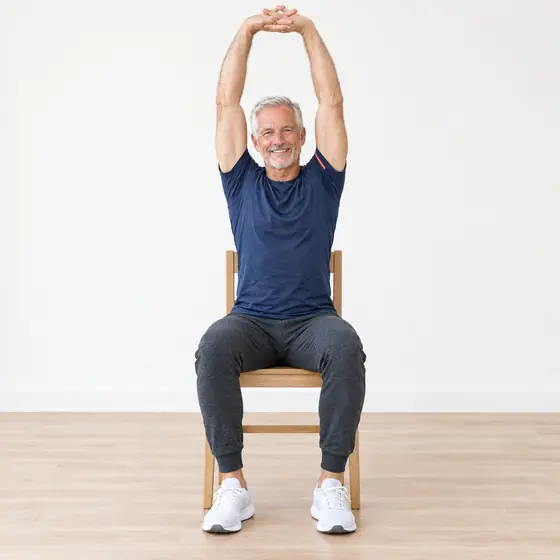
Overhead Reach
Lengthens the shoulders and spine for reaching a high shelf or hanging clothes in a closet.
- Sit tall, interlace your fingers.
- Turn your palms up and reach toward the ceiling.
- Hold, breathing slowly.
- Easier
- Reach to forehead height.
- Harder
- Gently lean a little side to side.
- Coach tip
- Long spine, relaxed face.
- Week 1
- hold 15 seconds
-

Belly Breathing
Slows your breathing and settles the body at the end of the routine, a helpful habit before bed.
- Sit tall, one hand on your belly, one on your chest.
- Breathe in slowly through your nose, filling the belly.
- Breathe out slowly through your mouth.
- Easier
- Take shorter breaths.
- Harder
- Make each breath out twice as long as the breath in.
- Coach tip
- The belly hand moves, the chest hand stays still.
- Week 1
- 6 reps
A simple routine to start
In week 1, stretch 5 days a week. Go through the eight stretches once in order, holding each stretch for 15 seconds and doing 6 slow reps of the Seated Cat-Cow and Belly Breathing. Do the Neck Tilt, Seated Twist, Hamstring, Figure-4 and Calf stretches on each side. Breathe slowly through every hold and keep the pace unhurried.
How to progress over 4 weeks
- Week 2: stretch 6 days, hold each stretch for 20 seconds and do 8 reps of the moving exercises.
- Week 3: make it daily, 7 days a week, with 25-second holds and 8 reps.
- Week 4: keep stretching every day, with 30-second holds and 10 reps.
Stay safe and comfortable
- Stretch to a gentle pull, never to pain, and never bounce.
- Use a sturdy chair with no wheels, and hold its back with both hands during the Calf Stretch.
- Move into and out of each stretch slowly, and come up from forward leans with a long back.
- Wear closed shoes or go barefoot on a non-slip floor, and keep the room warm so muscles relax.
Stretching exercises for seniors over 70 and over 80
Stretching exercises for seniors over 70 or over 80 work best seated and in a smaller range. Lean forward only a little in the Hamstring Stretch, rest the ankle on the shin for the Figure-4, and reach to forehead height on the Overhead Reach. Take a smaller step back in the Calf Stretch and hold the chair with both hands. Shorter holds are fine at first.
Questions
Can seniors do stretching exercises in a chair?
Yes. Seven of the eight stretches on this page are done seated, including the Neck Tilt, Seated Twist, Hamstring Stretch and Figure-4 Stretch. Sit on a sturdy chair with no wheels, feet flat on the floor. Chair stretching is a comfortable way to start and works just as well on busy days.
How often should seniors stretch?
Most days of the week is ideal, and daily is fine because stretching needs no rest days. Short, regular sessions of 10 to 15 minutes do more than one long session a week. The 28-day plan starts at five days a week and builds to every day by week three.
Is stretching good for seniors with arthritis?
Gentle stretching can help stiff joints feel easier to move. Work slowly, stay in a comfortable range, and skip any stretch that causes joint pain. A warm room or a warm shower first can make stretching feel better. If you have arthritis or a joint replacement, ask your doctor or physical therapist which stretches suit you.
How long should a senior hold a stretch?
Start with 15 seconds and build up to about 30 seconds over a few weeks. Breathe slowly the whole time and relax into the stretch without bouncing. Longer holds are not needed. Repeating a 30-second stretch on most days is what builds flexibility over time.
Where can I get a stretching routine for seniors with pictures to print?
Right here. Print this page from your browser and you have all eight stretches with photos on paper. The full 28-Day Daily Stretch plan is a large-print PDF with 16 stretches, a four-week schedule, a daily tracker, the sit-and-reach test and a wall poster.