Dumbbell Exercises for Seniors (With Pictures)
These dumbbell exercises for seniors use a pair of light weights, from 1 to 5 pounds, and a sturdy chair. In about 15 minutes you will curl, press, row and stand, working the arms, shoulders, upper back and legs you use to carry bags, lift a laundry basket and put dishes away.
No dumbbells yet? Two full water bottles are a fine start. Pick a weight that lets you finish each set feeling you could do three more. Several moves are done seated, and each one comes with a photo and short steps so you can follow along at your own pace.
2-page PDF, large print, US Letter. Use the Men / Women switch at the top to change the photos.
Who these moves are for
This guide suits adults in their 60s, 70s and 80s who want more strength for daily tasks. It is a good fit for beginners who have never lifted weights, for people who used to lift and want an easy restart at home, and for walkers who want to add upper-body work. Seated options keep every move steady and controlled.
The 8 moves
-
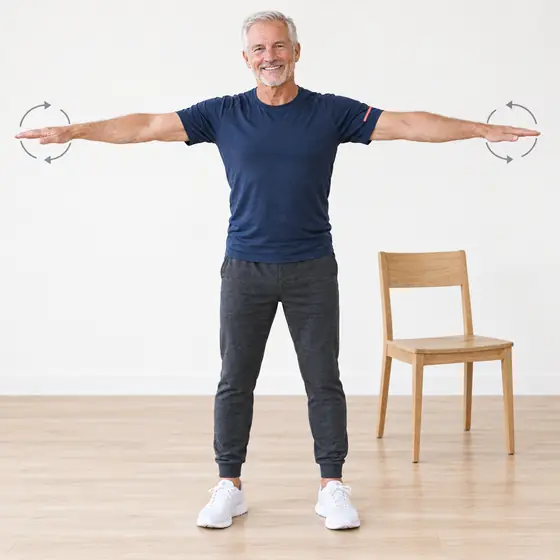
Arm Circles
Warms the shoulder joints before you lift, so reaching up to a cupboard feels smooth from the first rep.
- Stand tall, arms out to the sides at shoulder height, no weights.
- Draw small circles forward.
- Then small circles backward.
- Easier
- Do one arm at a time.
- Harder
- Make the circles a little bigger.
- Coach tip
- Shoulders down, away from your ears.
- Week 1
- 8 reps
-
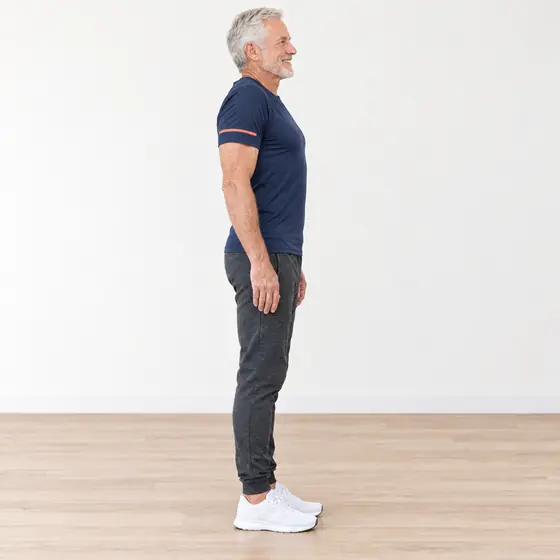
Shoulder Rolls
Releases tension in the neck and upper shoulders that builds up from reading, driving or screen time.
- Sit or stand tall, arms relaxed.
- Roll your shoulders up, back and down.
- Make slow, smooth circles.
- Easier
- Roll one shoulder at a time.
- Harder
- Hold the light weights while rolling.
- Coach tip
- Breathe out as your shoulders drop.
- Week 1
- 8 reps
-

Bicep Curl
Builds the arm strength for lifting a grocery bag, a pot of water or a grandchild onto your lap.
- Stand tall, a dumbbell in each hand, palms forward.
- Bend your elbows and curl the weights up.
- Lower slowly all the way down.
- Easier
- Sit down, or curl one arm at a time.
- Harder
- Take 3 seconds to lower.
- Coach tip
- Elbows stay glued to your sides.
- Week 1
- 8 reps
-

Seated Overhead Press
Strengthens the shoulders for putting things on a high shelf or lifting a carry-on into an overhead bin.
- Sit tall, dumbbells at shoulder height, palms forward.
- Press the weights up overhead.
- Lower slowly back to your shoulders.
- Easier
- Press one arm at a time.
- Harder
- Pause at the top for 2 seconds.
- Coach tip
- Keep your back against the chair.
- Week 1
- 8 reps
-
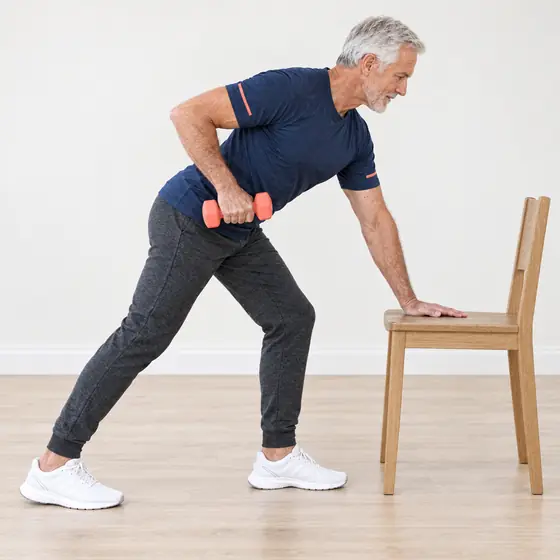
Supported Row
Works the upper back muscles that help you stand tall and pull open a heavy door.
- Place one hand on the chair seat, step back and lean forward with a flat back.
- Let the dumbbell hang, then pull it up toward your hip.
- Lower slowly, then switch arms.
- Easier
- Use a lighter weight.
- Harder
- Pause at the top for 2 seconds.
- Coach tip
- Squeeze your shoulder blade toward your spine.
- Week 1
- 8 reps
-
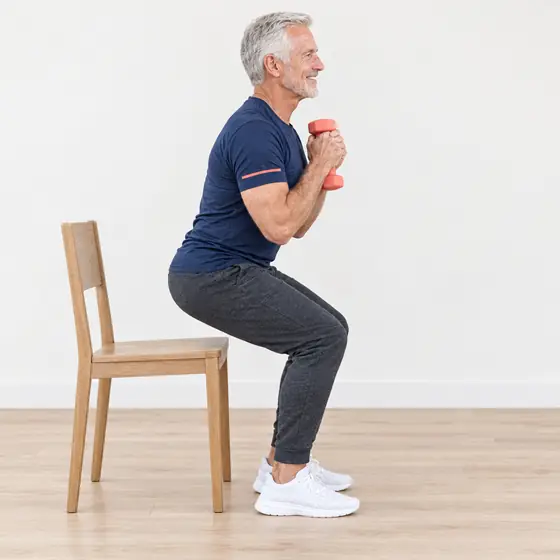
Weighted Sit to Stand
Adds a little load to rising from a chair, building the thighs and glutes you use for every step.
- Sit near the front of the chair, holding one dumbbell at your chest.
- Lean forward and stand up, pushing through your heels.
- Sit back down slowly.
- Easier
- Do it without the weight.
- Harder
- Take 3 seconds to sit down.
- Coach tip
- Nose over toes as you stand.
- Week 1
- 8 reps
-
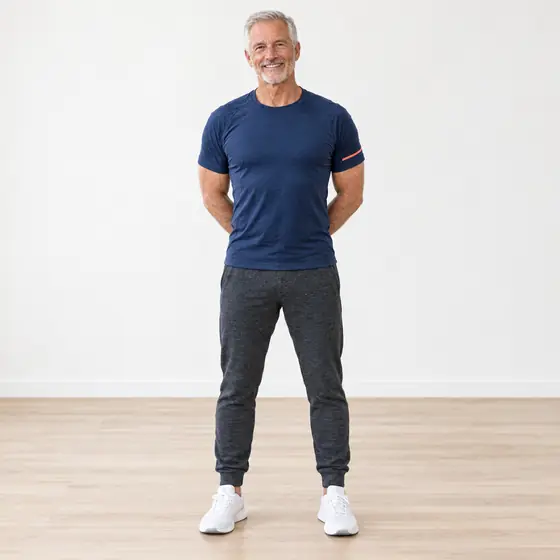
Chest Opener
Opens the front of the chest after all the pressing work and encourages an upright, easy posture.
- Stand tall, no weights.
- Clasp your hands behind your back.
- Gently lift your chest and squeeze your shoulder blades.
- Easier
- Hold a towel between your hands.
- Harder
- Lift your hands a little away from your back.
- Coach tip
- Undoes all the forward pressing.
- Week 1
- hold 15 seconds
-
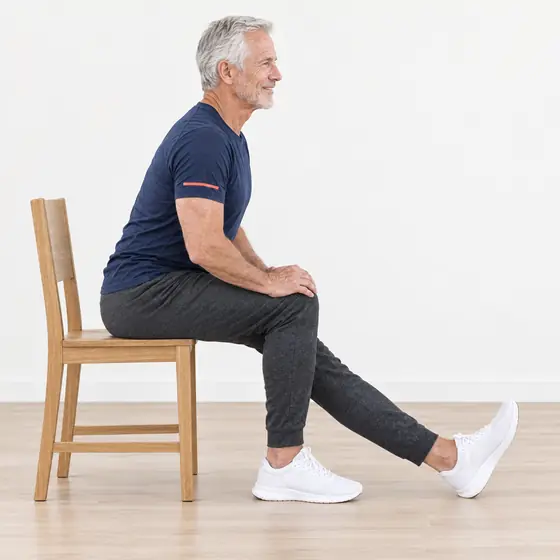
Seated Hamstring Stretch
Eases the back of the thighs after the standing work, which helps when you bend down to tie your shoes.
- Sit at the front of the chair, one leg straight, heel down, toes up.
- Keep your back long and lean forward from your hips.
- Hold, then switch legs.
- Easier
- Lean forward only a little.
- Harder
- Reach your hands toward your shin.
- Coach tip
- Lean from the hips, not the shoulders.
- Week 1
- hold 15 seconds
A simple routine to start
In week 1, train 3 days a week, with a day off between sessions. Go through the eight moves once, doing 8 slow reps of each lifting move, and hold the Chest Opener and Hamstring Stretch for 15 seconds. The row and the hamstring stretch are done on each side. Lift for 2 seconds, lower for 2 seconds, and breathe out as you lift.
How to progress over 4 weeks
- Week 2: lift 4 days a week and add 2 reps, so 10 per move, with 20-second stretch holds.
- Week 3: stay at 4 days and 10 reps, and complete the eight moves twice per session.
- Week 4: train 5 days, 2 rounds of 12 reps. When 12 feels easy two workouts in a row, go up 1 to 2 pounds.
Stay safe and comfortable
- Start lighter than you think. Good form with a 2-pound weight beats a heavier weight that swings.
- Keep your wrists straight and move slowly, especially as you lower the weight.
- Breathe out as you lift and in as you lower, and never hold your breath.
- Use a sturdy chair with no wheels for seated moves, and set the weights on the floor between sets.
Dumbbell exercises for seniors over 70 and over 80
Dumbbell exercises for seniors over 70 or over 80 start well seated, with 1 to 2 pound weights or water bottles. Curl or press one arm at a time, which is the easier option in the plan, and do the Sit to Stand without a weight until it feels steady. Rest 30 seconds between moves if you like. Muscles respond to regular practice at every age, so steady sessions pay off.
Questions
What weight dumbbells should a senior use?
Most beginners do well with 1 to 3 pound dumbbells, and some start at 5 pounds for leg moves. The right weight lets you finish 8 to 12 smooth reps with good form and still feel you could do three more. When that feels easy for two workouts in a row, move up 1 to 2 pounds.
Are dumbbell exercises good for seniors who are beginners?
Yes. Light dumbbells are one of the simplest ways to start strength training. The moves are easy to learn, the weight is easy to adjust, and you can do many of them seated. Begin with 8 reps, three days a week, and add reps before you add weight.
How often should seniors lift weights?
Two to three days a week is a good starting point, with a rest day between sessions so muscles can recover. As the routine becomes familiar, four or five shorter sessions work well too. The 28-day plan starts at three days and builds to five by week four.
Is there a dumbbell workout for seniors PDF?
Use your browser's print option and this page becomes a handy sheet with all eight moves and photos. The full 28-Day Dumbbell Strength plan is a large-print PDF with all 16 moves, a four-week schedule, a daily tracker, the arm curl test and a poster for your wall.
Is it safe for older adults to start lifting weights?
If you have a heart condition, high blood pressure, a recent surgery or joint problems, it makes sense to ask your doctor or physical therapist which moves and weights suit you. They can help you start with confidence. Otherwise, light weights and slow, controlled reps are a sensible way to begin.