Balance Exercises for Seniors (With Pictures)
These balance exercises for seniors are done standing beside a sturdy chair or kitchen counter, with a hand on it whenever you want. You shift your weight side to side, stand with your feet in narrower positions, lift one foot, rise from a chair and walk heel to toe. Each move has a photo to follow.
A session takes about 15 minutes, and you can do it in the kitchen while the kettle heats. You need a chair with no wheels or a counter, closed shoes with good grip and a clear patch of floor. The holds start short, just 10 seconds, and grow a little each week.
2-page PDF, large print, US Letter. Use the Men / Women switch at the top to change the photos.
Who these moves are for
These moves suit adults over 60, 70 and 80 who want to feel steadier on stairs, curbs and uneven ground. They work for beginners, for people who have been less active for a while, and for anyone who simply wants more confidence on their feet. You choose how much to hold on, so the routine grows with you.
The 8 moves
-
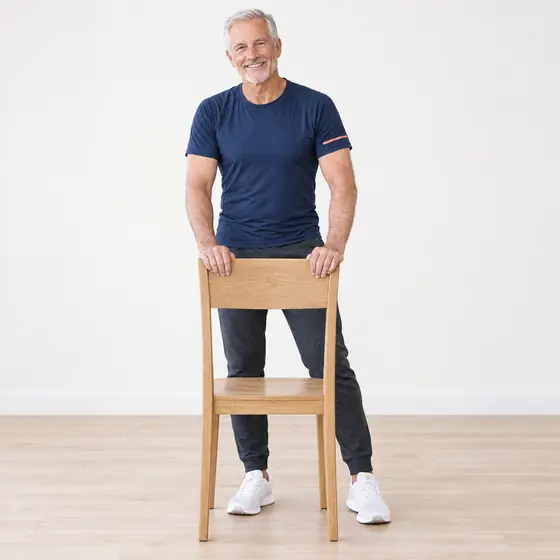
Side Weight Shifts
Teaches your ankles and hips to move your weight smoothly, as you do when stepping off a bus or out of a car.
- Stand behind the chair, hands on the backrest, feet hip-width apart.
- Shift your weight slowly onto your right foot.
- Shift back through the middle onto your left foot.
- Easier
- Make the shift smaller.
- Harder
- Lift the free heel as you shift.
- Coach tip
- Move from your hips, keep your shoulders level.
- Week 1
- 8 reps
-
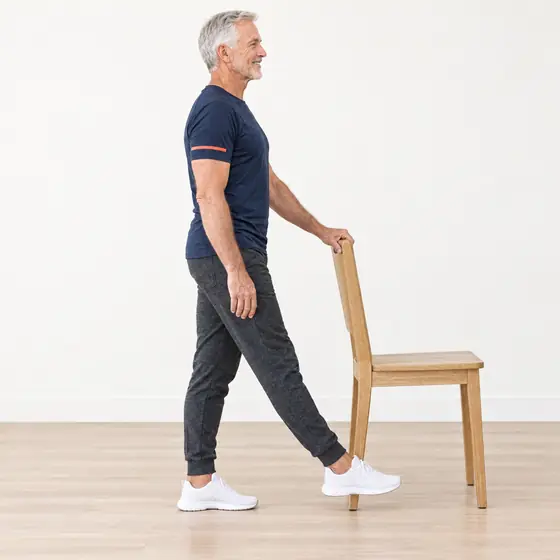
Toe Taps
Practices quick, controlled foot placement, the same skill you use to catch your step on a loose rug.
- Stand tall holding the chair back.
- Tap one foot lightly behind you, then bring it back.
- Repeat, then switch feet.
- Easier
- Tap just a few inches back.
- Harder
- Tap back, to the side and forward.
- Coach tip
- Stand tall on the standing leg.
- Week 1
- 8 reps
-
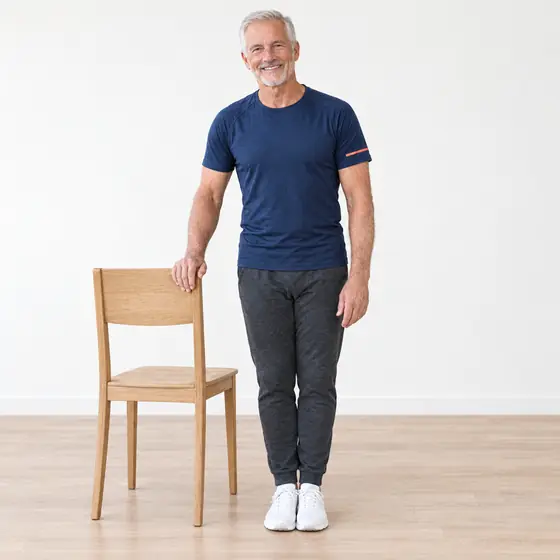
Feet-Together Stand
Narrows your base of support so standing at the sink or in the shower feels more settled.
- Stand tall next to the chair, hand on the backrest.
- Bring your feet together so they touch.
- Hold steady, breathing slowly.
- Easier
- Keep both hands on the chair.
- Harder
- Hover your hand just above the chair.
- Coach tip
- Fix your eyes on one point ahead.
- Week 1
- hold 10 seconds
-
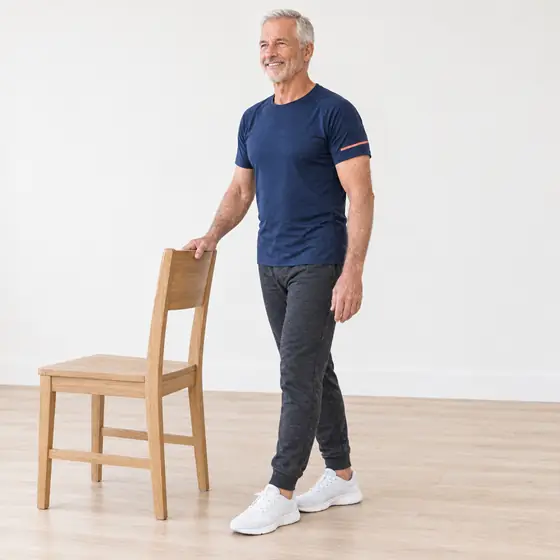
Step Stand
Trains the staggered stance you pass through with every step, which supports a steadier walk.
- Stand next to the chair, hand on the backrest.
- Place one foot a comfortable step in front of the other, toes forward.
- Hold, then switch feet.
- Easier
- Take a shorter step.
- Harder
- Bring your feet closer to one straight line.
- Coach tip
- Stand tall, breathe, look ahead.
- Week 1
- hold 10 seconds
-
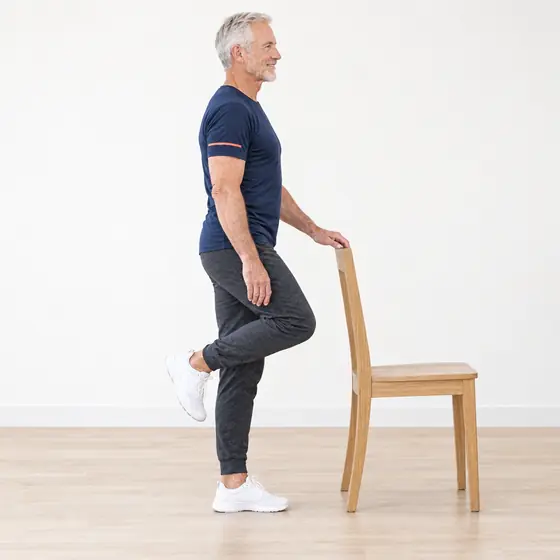
One-Leg Stand
Builds hip and ankle control for the moments you stand on one leg, like pulling on pants or climbing a stair.
- Stand next to the chair, hand on the backrest.
- Lift one foot a few inches off the floor.
- Hold, then switch legs.
- Easier
- Just lift the heel, keep the toes down.
- Harder
- Use only your fingertips on the chair.
- Coach tip
- Squeeze the buttock of your standing leg.
- Week 1
- hold 10 seconds
-
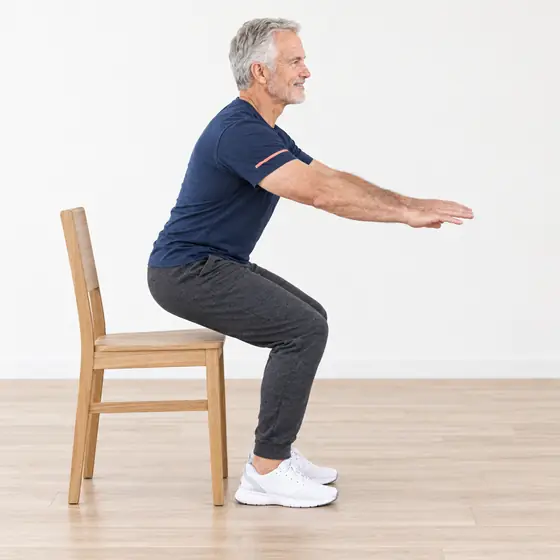
Sit to Stand
Strengthens the legs you use to rise from low seats, toilets and car seats with less effort.
- Sit near the front of the chair, feet flat.
- Lean forward and stand up, pushing through your heels.
- Sit back down slowly.
- Easier
- Use your hands on your thighs to help.
- Harder
- Cross your arms over your chest.
- Coach tip
- Nose over toes as you stand.
- Week 1
- 8 reps
-
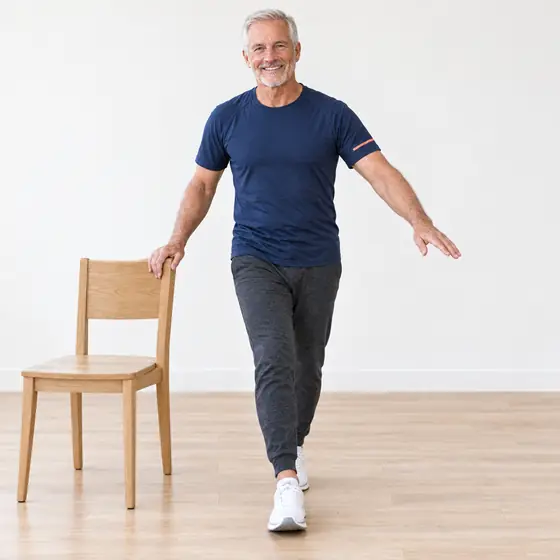
Heel-to-Toe Walk
Practices walking in a narrow line, useful for tight hallways, store aisles and garden paths.
- Stand next to a wall or counter.
- Step forward placing your heel right in front of your toes.
- Take slow steps in a straight line.
- Easier
- Leave a small gap between your feet.
- Harder
- Walk without touching the wall.
- Coach tip
- Look ahead, not at your feet.
- Week 1
- 8 reps
-
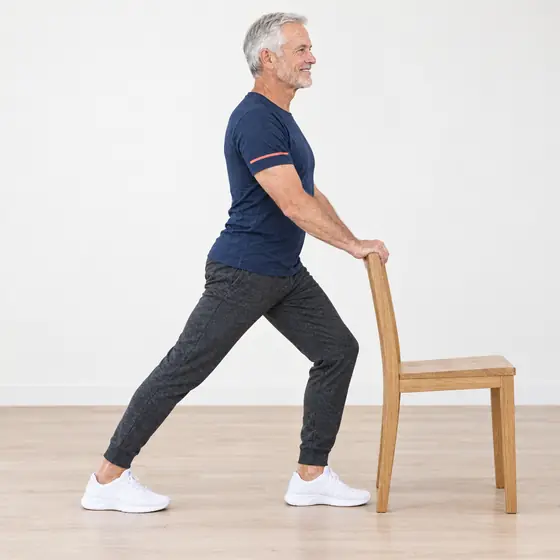
Calf Stretch
Keeps the calves loose so your ankles can flex freely, which helps your feet react on slopes and steps.
- Hold the chair back, step one foot back.
- Keep the back leg straight, heel down.
- Bend the front knee until you feel a stretch, then switch.
- Easier
- Take a smaller step back.
- Harder
- Step a little further back.
- Coach tip
- Both toes point forward.
- Week 1
- hold 10 seconds
A simple routine to start
Do the 8 moves in order next to your support, 3 days a week, resting a day between sessions. For the rep moves, do 8 reps, 8 per side where it switches. For the standing holds and the calf stretch, hold for 10 seconds on each side. Complete 1 round, keeping a hand on the chair at first.
How to progress over 4 weeks
- Week 2: practice 4 days a week, raise the reps to 10 and hold each position for 15 seconds.
- Week 3: keep 4 days and 10 reps, hold for 20 seconds and go through all 8 moves twice.
- Week 4: practice 5 days, do 12 reps, hold for 30 seconds and complete 2 rounds, using just your fingertips on the chair if you feel ready.
Stay safe and comfortable
- Stand right next to a sturdy chair without wheels or a kitchen counter, and keep a hand close to it for every balance hold.
- Clear the floor around you of rugs, cords and pets before you start.
- Wear closed shoes with a grippy sole rather than socks or slippers.
- If you feel dizzy often or have an inner ear, nerve or blood pressure condition, check with your doctor or physical therapist first.
Balance exercises for seniors over 70 and over 80
For balance exercises over 70 or over 80, keep both hands on your support at the start. Make the weight shifts and toe taps small, and leave a little gap between your feet in the step stand. In the one-leg stand, lift only the heel and keep the toes down. Begin with 10-second holds, and move to one hand, then fingertips, only when you feel settled.
Questions
Can balance exercises help seniors prevent falls?
Balance training can help you feel steadier and react better when you trip, and research on older adults supports regular practice. No routine can promise you will never fall. Pair these moves with good lighting, clear floors and supportive shoes, and you give yourself solid support on every front.
What are the best balance exercises for seniors at home?
Good home moves are ones you can do next to a chair or counter: feet-together stands, step stands, one-leg stands, toe taps and heel-to-toe walking. They need no equipment and take little space. Start with short holds and a firm grip, then hold on less as you get steadier.
Is there a printable PDF of balance exercises for seniors?
You can print this page as a free version with 8 pictured moves and week-one numbers. The full 28-day plan is a large-print PDF with all 16 moves, a 4-week plan, a tracker, a one-leg balance test for Day 1, 14 and 28, and a wall poster.
How long should a senior hold a balance exercise?
Start with 10 seconds per position, which is enough to train your body without tiring your legs. Add about 5 seconds a week. By week four, most people hold for 30 seconds. If you wobble, touch the chair and keep going rather than stopping the set.
How often should seniors do balance exercises?
Three days a week is a good start, and short sessions work well. Over a month you can build to 5 days. Balance responds to frequent practice, so 15 minutes several times a week tends to do more than one long session.